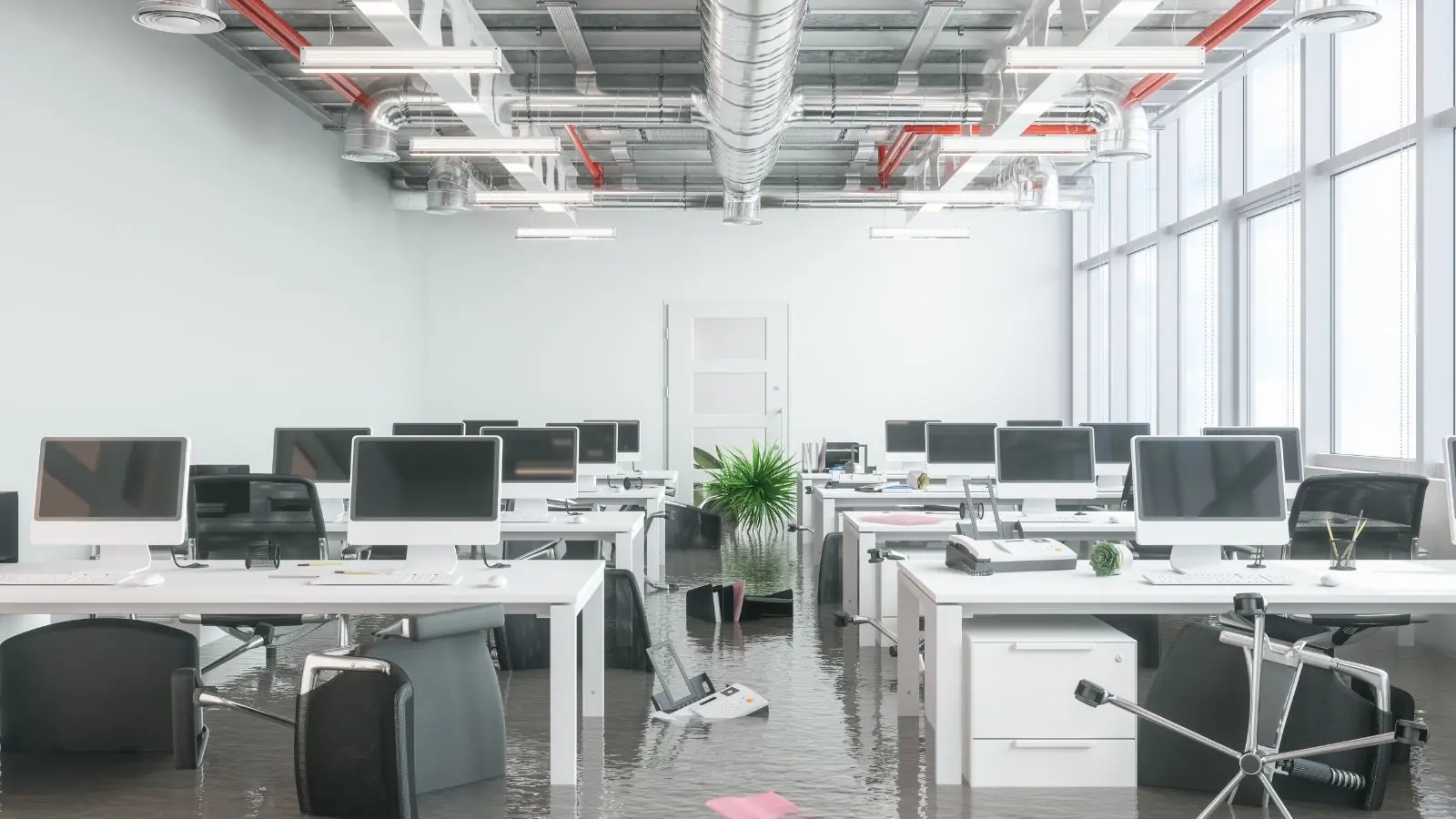
A pipe fails over a weekend, a roof drain backs up, or a supply line gives way inside a wall, and by Monday water has spread across a shop, office or warehouse space. The physics are the same as in a house, but the floor is bigger and more people are asking who is responsible. Our line at (760) 769-1159 is open 24/7, with same-day response when available.
Commercial water damage restoration for us means pulling out the standing water, drying the structure, cleaning affected surfaces and recording moisture readings that you and your insurer can use. We also talk with whoever is doing the rebuild so the handoff is clean. We do not repair the plumbing, roof or air conditioning that caused the leak.
Reading the signs in a larger space
Water in a big room often shows up far from where it started. A damp corner can be the end of a long path under flooring or inside a wall, so the visible stain is rarely the whole story.
| What you see | What it often means | Best first move |
|---|---|---|
| Dark patch spreading on a concrete floor | Water is moving under coverings or along a joint | Mark the edge with tape and photograph it |
| Stained or sagging ceiling tiles | A supply, drain or roof leak above the grid | Keep people out from under it |
| Paint bubbling or baseboards lifting | Moisture is wicking up the wall | Photograph and call before painting over |
| Damp wall shared with the next unit | Water is crossing between spaces | Tell the owner or manager today |
| Musty smell with nothing visibly wet | Something hidden is damp | Call, and do not mask the smell |
Safety in the first hour
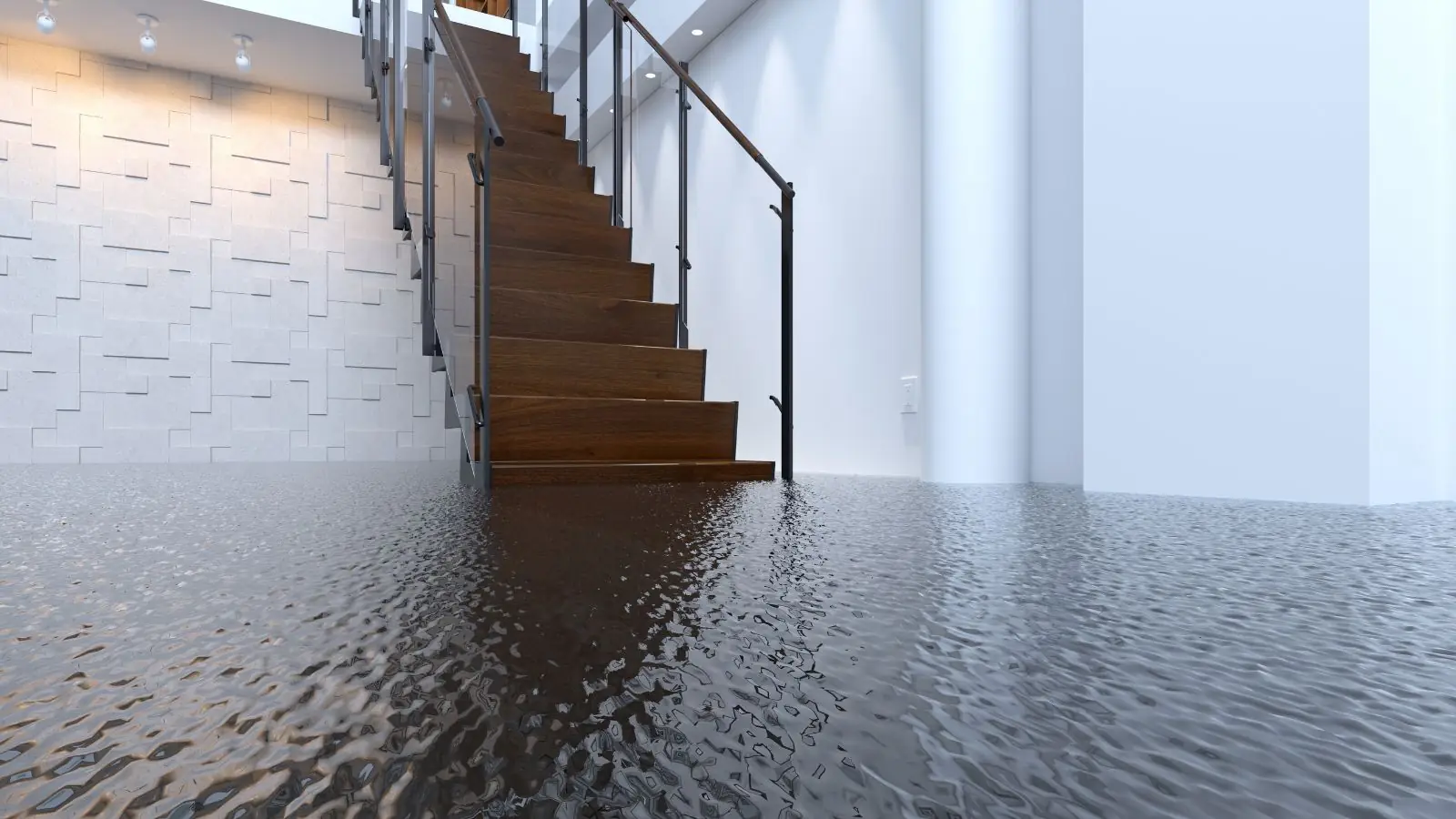
Protect people first, then the building. Staff and customers should leave any room with active dripping or standing water.
- Electrical Stay clear of puddles around outlets, panels and equipment. Switch power off only from a dry, reachable panel, and put a call to the utility or 911 ahead of ours if there is any shock risk.
- Water source Close the valve that feeds the leak if you can reach it safely. If you cannot find it, tell the property manager right away.
- Notify Tell the owner or manager and your insurance contact early, since leases often set notice times.
How a large floor gets dried
We start with an extraction unit to remove standing water, then map the damage with a moisture meter and a thermal imaging camera. That map shows wet concrete, wet wall bases and wet insulation that the eye misses.
Air movers push dry air across surfaces while LGR dehumidifiers pull moisture out of the room. A bigger floor needs more of both, and it needs more monitoring visits, because readings are taken in many spots over several days. Our structural drying and dehumidification work is measured against ANSI/IICRC S500, the industry reference standard.
Wet drywall or insulation that does not dry is cut out, and surfaces are treated with an antimicrobial product matched to the water type.
Work zones, shared walls and staying open
Some businesses try to keep operating during drying. We can plan work zones so wet areas are contained and equipment sits out of walkways, and we will put the scope in writing. We cannot promise that any space can stay open, because that depends on the water, the equipment and the safety of the room.
In multi-unit buildings, water moves through shared walls, floors and ceilings. A leak in one unit can wet the one beside it, so we check adjoining spaces with the meter and tell the owner or manager what we find.
Owner, tenant and the insurance claim
Who pays usually comes down to two documents, your lease and your policy. Leases often split duties between the owner and the tenant, so read yours for who maintains the pipes, the roof and the interior finishes.
Commercial policies often cover sudden, accidental water and often do not cover slow leaks. The California Department of Insurance notes that commercial policies typically exclude flood, which needs its own policy, and it publishes a residential property claims guide that still helps you understand how claims move.
- Our records Photos, moisture readings and a drying log, written for your insurer to review.
- Your move Ask your insurer what they want documented and keep damaged items until told otherwise.
What sets the price of a commercial job
The scope and the price are laid out before work starts, and the main factors are plain ones.
- Floor area More square footage means more equipment and more monitoring.
- Water type Contaminated water adds removal, disinfection and protective gear.
- Materials involved Concrete, carpet tile, drywall and insulation each dry differently.
- Units affected Water that reached neighboring spaces widens the scope.
- Access Work zones and limits on when crews can enter change the plan.
Describe the space and get a scope explained before work begins. Call (760) 769-1159
Mistakes to avoid after a commercial leak
Do not run fans and call it done. Moving air without removing the moisture can push humidity into the next room and leave the walls wet.
Do not cover wet floors with new coverings or paint over stains. Do not throw out damaged goods or finishes before photographing them. And do not wait on the owner's decision while the water keeps spreading.
What is local about water damage around Thermal
Coachella is a farm and shipping hub about 6 miles northwest of Thermal, and Coachella spaces often hold stock. If yours does, write down what sat on the floor when the water arrived, because your insurer will ask. Larger Indio buildings are reached the same way.
State Routes 86 and 111 carry farm freight and trucks toward Interstate 10, so tell regular carriers early if a wet loading area changes where they can unload. Fields around the community are canal-irrigated, so soil tracked in on boots and tires can hide how wet a floor really is.
Summers bring many days over 110 degrees F, and a space with the cooling off will heat fast and dry unevenly. Work on cabinetry, plumbing or built-ins worth $1,000 or more generally needs a contractor licensed with the California Contractors State License Board.
Questions about water damage in Thermal
Yes. Dispatch runs 24/7, nights and weekends included, with same-day response when available. The dispatcher can tell you what to do about the water while you wait.
It depends on your lease and the cause of the water. Check what the lease says about the building, the interior and insurance, and ask your insurer and the property owner. We document the damage so each party has what they need.
Sometimes parts of a space can keep working, but we do not promise it. We plan work zones, explain the scope in writing and tell you honestly what the equipment and the water allow.
It can. Water moves through shared walls, floors and ceilings, so we check neighboring spaces with a moisture meter and report what we find to the owner or manager.
Commercial policies typically exclude flood, according to the California Department of Insurance, and a separate flood policy is needed. Sudden plumbing water is a different matter, so read your policy and ask your insurer.
Hot, dry air helps moisture leave surfaces, but it does not reach water inside concrete or walls on its own. We still measure and dry with dehumidifiers and air movers, and we keep taking readings until the materials are dry.