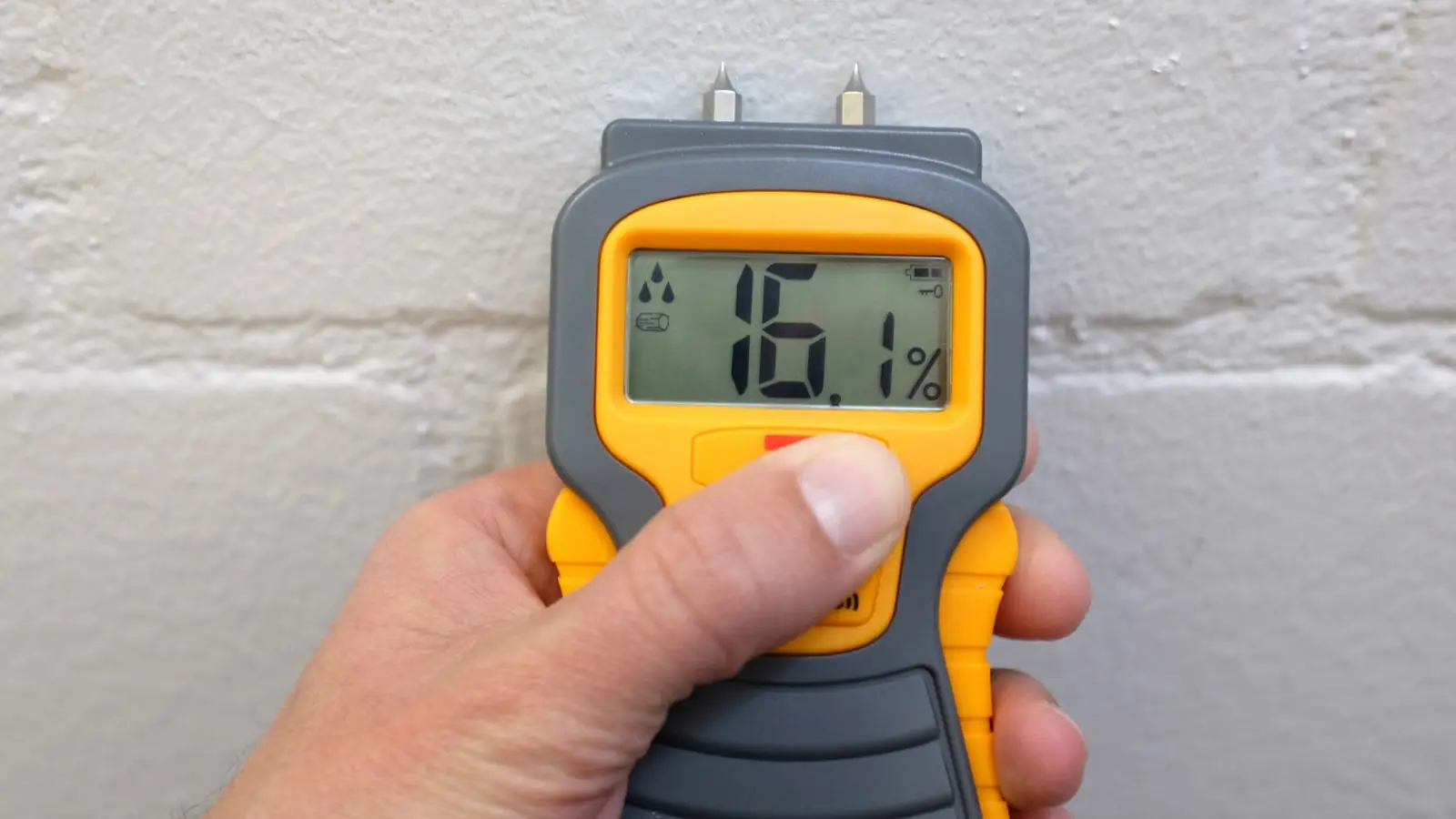
Structural drying starts once the standing water is gone. It pulls moisture out of drywall, framing, subfloor, hardwood and insulation until each one matches a dry reference, not until it feels dry to the hand. Call (760) 769-1159 at any hour, since dispatch is open 24/7 with same-day response when available.
This page is about how drying is run and checked from day to day. The first hours of a response, including the opening moisture map, sit under water mitigation, and the drying described here picks up from that point.
We dry homes in Thermal and also take calls for water damage in Coachella and the La Quinta service area.
Why a closed house in the desert still stays wet
Dry outdoor air does nothing for a sealed house. The air touching a wet wall or floor fills with moisture until it is saturated, and it stays that way unless something removes it. Dehumidifiers pull that moisture out, and air movers sweep drier air across the surface to take its place.
Summers in Thermal bring many days over 110 degrees F and little rain in an average year, so people assume a leak will bake out. But a house shut tight to hold the cooling keeps the moisture inside, and drying needs a plan for where it goes.
The clock matters too. EPA guidance says mold can begin on wet organic material within 24 to 48 hours. Thermal is unincorporated Riverside County and sits on land below sea level, so ask Riverside County Building and Safety whether permits apply if drying leads to demolition.
Signs the structure is still wet
Wet material rarely looks wet. These signs show up after the visible water is gone.
| What you notice | What may still be wet | How we check |
|---|---|---|
| Floor feels cool or damp after mopping | The subfloor or the slab surface | Moisture meter at several marked spots |
| Baseboard paint bubbles or gaps open at the wall | The bottom of the drywall and the cavity behind it | Meter plus a thermal imaging camera scan |
| Hardwood edges lift or cup | The boards and the subfloor beneath them | Meter on the boards, then the subfloor |
| Musty smell in a room that looks dry | Insulation or framing inside a wall | Thermal camera scan, then a probe reading |
The equipment and what each piece does
Nothing goes on the floor without a reason. Each tool answers a different question about the wet building.
- Moisture meters Pin and pinless meters read wood, drywall and concrete, and give the numbers we compare against the dry reference.
- Thermal imaging camera It shows temperature differences that hint at wet areas behind surfaces. It points the way, and the meter confirms.
- Air movers These push air across floors and walls so moisture leaves the surface and enters the room air.
- LGR dehumidifiers Low grain refrigerant units pull water out of the air and handle most residential jobs.
- Desiccant dehumidifiers These use a moisture-absorbing wheel and suit very dry or cool conditions. We bring one in when the readings call for it.
- Containment Plastic sheeting seals the drying zone, so the equipment works on the wet rooms and not on the whole house.
Drying cavities, hardwood and subfloors
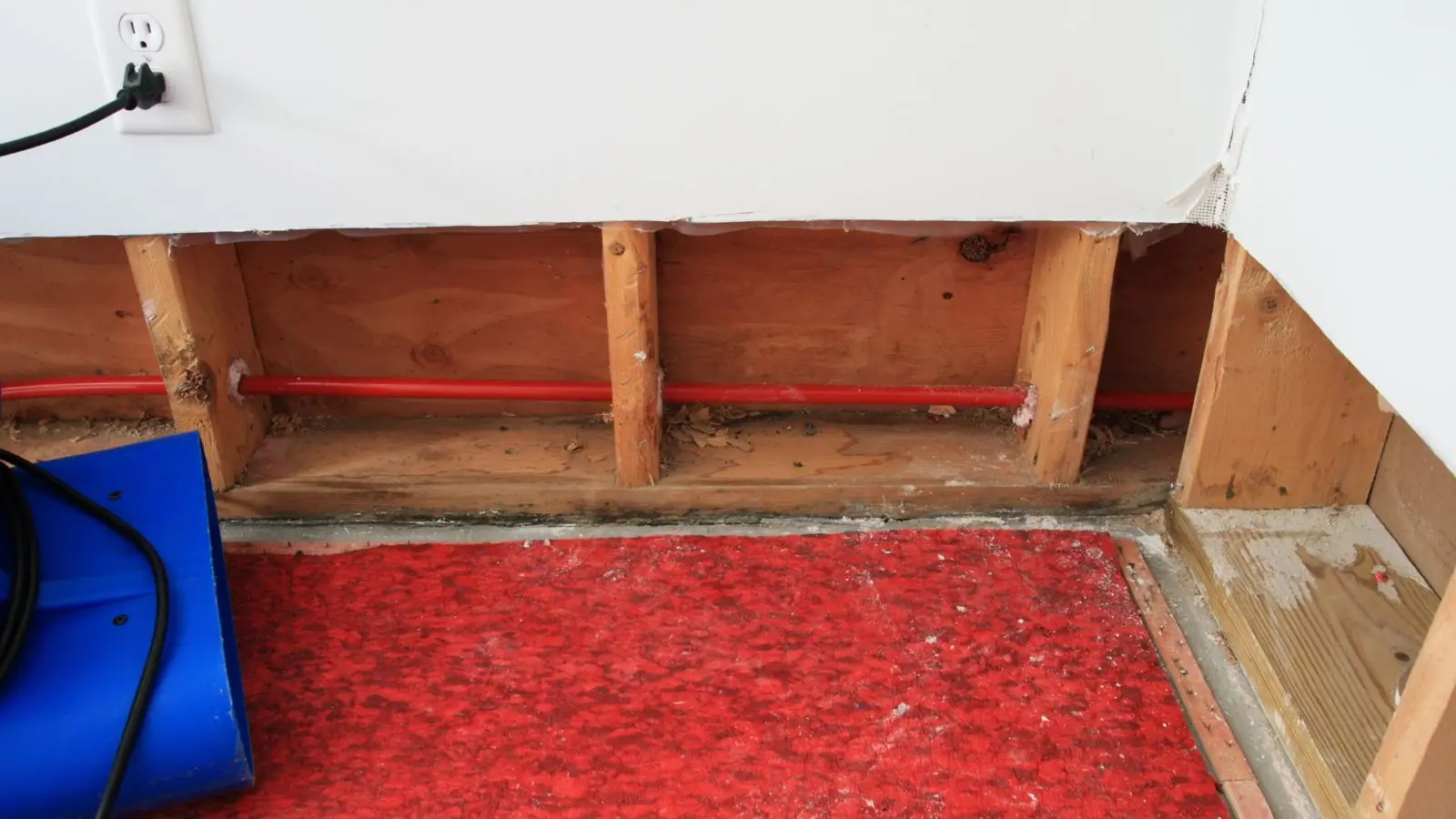
Wall cavities hold water that never reaches the surface. We either drill small holes and inject dry air, or remove a strip of baseboard and drywall at the base so air can reach inside. Drywall and insulation that stay wet usually have to be cut out.
Hardwood and subfloor get drying mats, low vents that pull air through under and between boards. Some floors can be saved and some cup past recovery, and the readings tell us which. When material has to come out, the rebuild follows under water damage repair.
Daily monitoring and when drying is finished
On day one we set the drying goal from dry reference readings, usually the same kind of wall or floor in a room the water never reached. A wet wall is finished when it reads close to that reference, not when the clock says so.
Each day a technician returns, takes readings at the same marked spots, logs room humidity and equipment, then moves or pulls units as areas reach their goal. Spots that lag get more airflow or a change of method. Our goals and logs are built around ANSI/IICRC S500, the industry reference standard for water damage restoration.
A typical job takes several days. Thick or dense materials, hardwood, concrete, a large wet area, hidden cavities and poor equipment placement stretch it. A small clean-water leak caught early, with walls opened quickly, shortens it.
What sets the price of a drying job
The price follows the work. Count the rooms, the materials involved, the water category, how many days the equipment runs, and whether walls or floors must be opened or contained. A job with more machines running for more days costs more than a small one.
We explain the scope and the price before equipment goes in, and we tell you if the daily readings change the plan.
Water already dried on top but still in the walls? Call (760) 769-1159 and we will plan the drying.
Drying records and your insurance claim
A daily drying log shows what was wet, how wet, for how long and when it reached dry. An adjuster can read it and see that the work matched the loss. Ask for the readings, photos and equipment list when the job ends.
Sudden and accidental damage, like a supply line that breaks, is often covered, while slow seepage over time often is not. Water that rises from outside is usually a flood claim, and flood coverage is a separate policy. The California Department of Insurance publishes a residential property claims guide at insurance.ca.gov, and your policy is the final word.
Safety and mistakes to avoid while equipment runs
Equipment stays in your home for days, so set the house up for it.
- Keep cords dry Stay out of standing water near outlets, and keep extension cords off wet floors.
- Cut power only if safe Switch off power only if the panel is dry and reachable. For electrical or gas risk, call the utility or 911 before calling us.
- Do not switch units off Turning off air movers at night or moving them to clear a room breaks the airflow plan and adds days.
- Expect warmth Dehumidifiers give off warm air, so rooms run hotter, which matters in a Thermal summer. Tell us if the heat is a problem.
Questions about water damage in Thermal
Yes. We answer 24/7 and send a crew the same day when we can. Call (760) 769-1159 and we will tell you what to do about water still standing.
Several days is typical. Dense materials, a large wet area and hidden cavities add time, while a small clean-water leak caught early shortens it. The daily readings decide the end date, not the calendar.
We compare readings on the wet materials with readings from the same kind of material in a dry area. When they match closely at every marked spot, the area is finished. The log shows each day's numbers.
That usually falls short. Fans move air, but outdoor air adds moisture and nothing pulls water from the wall cavities. Controlled airflow with dehumidifiers dries faster and gives you readings to prove it.
Yes, but heat alone does not dry a closed house. Moisture has to be removed from the air with dehumidifiers, and the cooling system still has to run. We plan the equipment around your home, not the forecast.