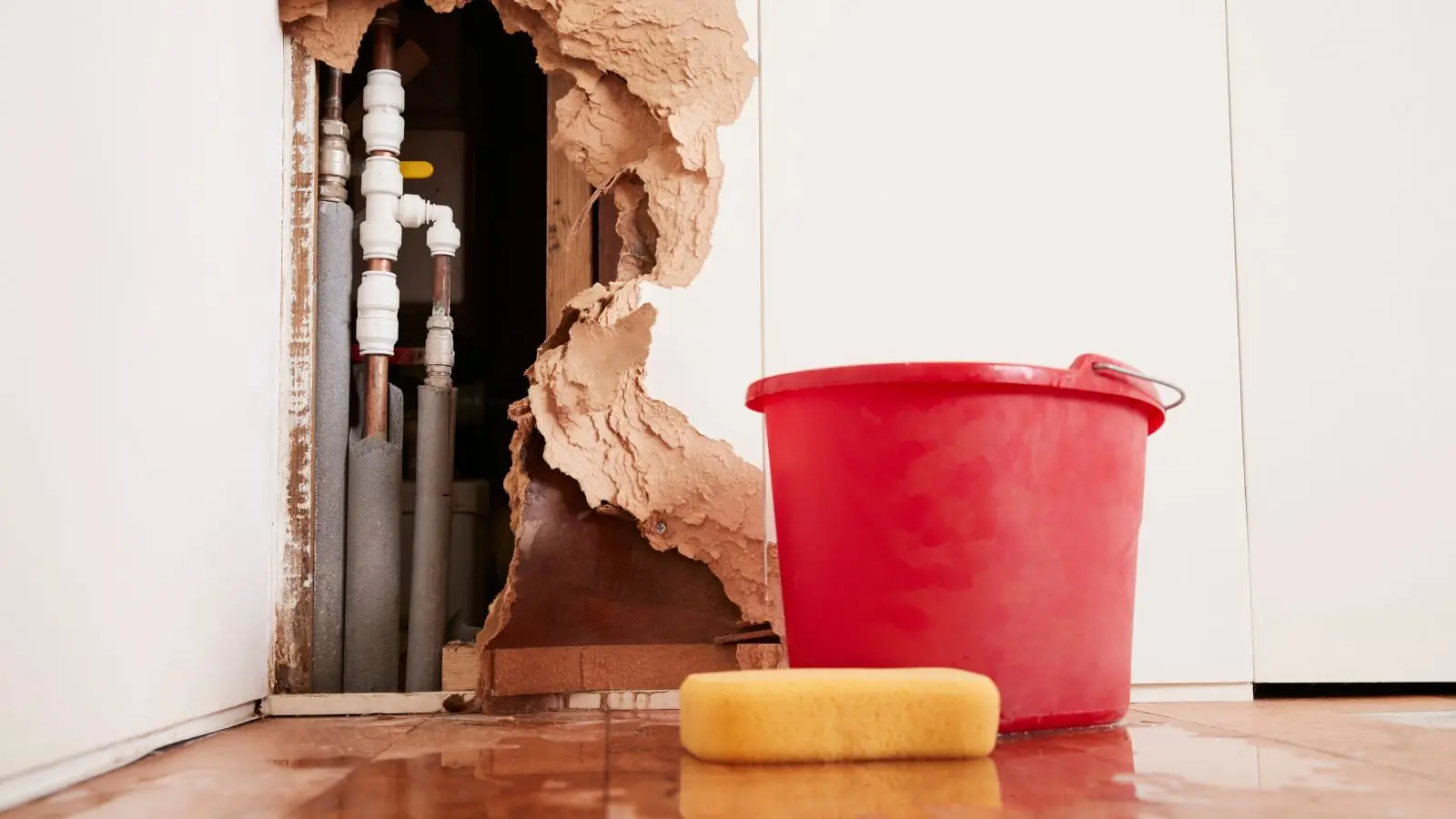
A supply line, braided connector or fitting lets go, and water runs for minutes or for hours before anyone notices. By then it has filled a wall cavity, dripped through the ceiling below and crept out along the slab edge. Call (760) 769-1159 at any hour, because dispatch is open 24/7 and emergency water removal is the first step.
Thermal sits in dry desert air, and that hides the problem. A wall can look fine from across the room while the back face of the drywall stays wet. We find that hidden water with meters and a thermal camera, then dry it in place. We do not repair pipes, so your plumber handles the break itself.
First hour safety steps when a pipe lets go
What you do in the first sixty minutes sets the size of the job. Work through these in order and keep everyone out of wet rooms until the power question is settled.
- Main valve Turn the main shutoff clockwise until it stops. If it will not turn or you cannot find it, call the provider on your water bill.
- Electrical Stay out of standing water near outlets, cords and the panel. Cut power only if the panel is dry and safe to reach, and call the utility or 911 if you see sparking.
- Drain the line With the main closed, open the lowest faucet to let the pipes empty and release pressure.
- Photos Shoot the break, the wet rooms and damaged belongings before anything moves.
- Two calls Phone a plumber for the repair and phone us for the water. They are separate jobs and can run the same morning.
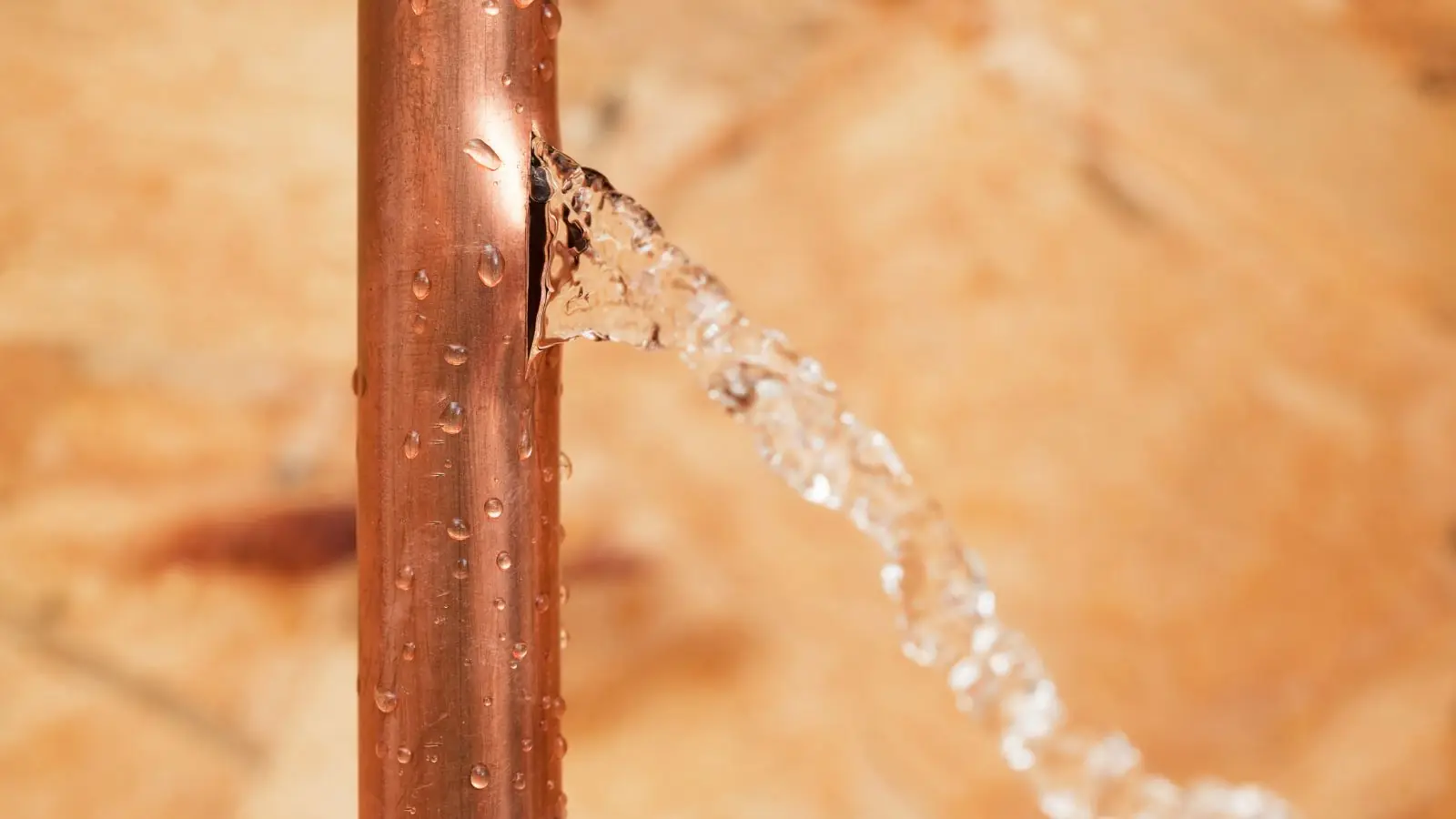
What a failed line leaves behind
Pipe water rarely stays where it started. This table shows what homeowners usually see and what it points to.
| What you see | What it usually means | Where we look next |
|---|---|---|
| Brown stain growing on a ceiling | Water pooled on the floor above or in a joist bay | Light fixtures, attic access and the room overhead |
| Paint bubbling or baseboards lifting | Moisture wicking up from the floor into the wall | Both faces of the wall and the cabinet bases |
| Cool, damp spot on the flooring | Water traveling under the floor covering or along the slab | Door thresholds, slab edges and neighboring rooms |
| Meter still turning with every fixture off | The line is still leaking somewhere | The main valve, then your plumber |
| Musty smell in a closed room | Wet insulation or drywall that never dried | Cavities behind the wall and inside cabinets |
How we dry a house after a pipe break
Once the water is shut off, the order of work matters more than the speed of any one tool. This is the water mitigation sequence we follow on every pipe job.
- Confirm the main is closed and map the wet areas with a moisture meter and a thermal imaging camera.
- Pull standing water with an extraction unit, then lift wet pad or flooring that cannot dry in place.
- Open the cavities. Small holes or cut-outs at the base of the wall let air reach wet insulation and the back of the drywall.
- Set air movers and LGR dehumidifiers, and check readings daily until the materials are dry. Our structural drying work typically takes several days.
- Treat the surfaces with an antimicrobial product before anything is closed back up.
ANSI/IICRC S500 is the industry reference we use for drying goals. Insulation and drywall that stay wet usually have to be cut out, and we tell you which before it happens.
Heat, water bills and permits in Thermal
Summers here bring many days over 110 degrees F. A wet house in that heat grows musty fast, so a slow response costs more than it would in a cooler place. Air conditioning often has to stay off in the wet zone during drying, and we plan around that.
Water service is not the same at every address. The Coachella Valley Water District serves much of the eastern valley, and some Thermal homes were on small mutual water systems, so the name on your water bill tells you which provider to call about a main line problem.
The plumbing fix is also a licensing question. Under the California Contractors State License Board rules, work worth $1,000 or more generally needs a licensed contractor, and you can check a license on the CSLB website. Thermal is unincorporated, so Coachella and Indio homeowners ask their city, while Thermal homeowners ask Riverside County Building and Safety about permits.
What sets the cost of a burst pipe job
Callers ask about price first, and the honest answer is that a few things decide it. How long the line ran matters most, followed by how many rooms and floors the water reached. Material counts too, because carpet pad, drywall and hardwood each dry or fail differently.
Wet cabinets, a slab edge and a ceiling below add steps. So do the number of equipment days and how much of the contents need handling. We explain scope and price before work starts, so nothing is a surprise.
Insurance and claims after a pipe failure
A pipe that breaks suddenly is often covered under a homeowners policy, while a slow drip over months is often treated as gradual damage and may not be. Check your policy and ask your insurer which one fits your loss.
- Sudden break Document the time you found it, shut the main and keep the failed part if you can.
- Gradual leak Ongoing seepage is the kind insurers tend to question, so dated photos help.
- Flood is different Rising outside water is usually excluded and needs a separate flood policy.
- Claims guide The California Department of Insurance at insurance.ca.gov publishes a residential property claims guide.
Mistakes to avoid after a pipe fails
Most extra damage comes from small choices made in the first day. Skip these.
- Running the air conditioner or fans in a wet room without knowing where the water went.
- Waiting a day to see whether the stain stops growing.
- Pulling up flooring yourself and leaving the wet slab or subfloor exposed with no drying plan.
- Using a household vacuum on standing water.
- Assuming the problem is done once the plumber leaves.
Questions about water damage in Thermal
Yes. Dispatch is open 24/7 and we aim for a same-day response when a crew is available. Shut the main valve if you can, then call (760) 769-1159.
No. Pipe repair belongs to a licensed plumber. We handle the water, the wet materials and the drying, and we can work around the plumber's visit.
Drying typically takes several days. It depends on the materials, how far the water traveled and how humid the house is. We check readings each visit and remove equipment only when the materials are dry.
Often a little. Drywall and insulation that stay wet usually have to be cut out, but small openings at the base of a wall can let us dry much of it in place.
Look at the name on your water bill. Some addresses are served by the Coachella Valley Water District and others by a small mutual water system, and that provider handles the line up to your meter.
Usually yes, if the power is safe and the wet rooms can be closed off. We tell you on arrival if any area should stay empty.