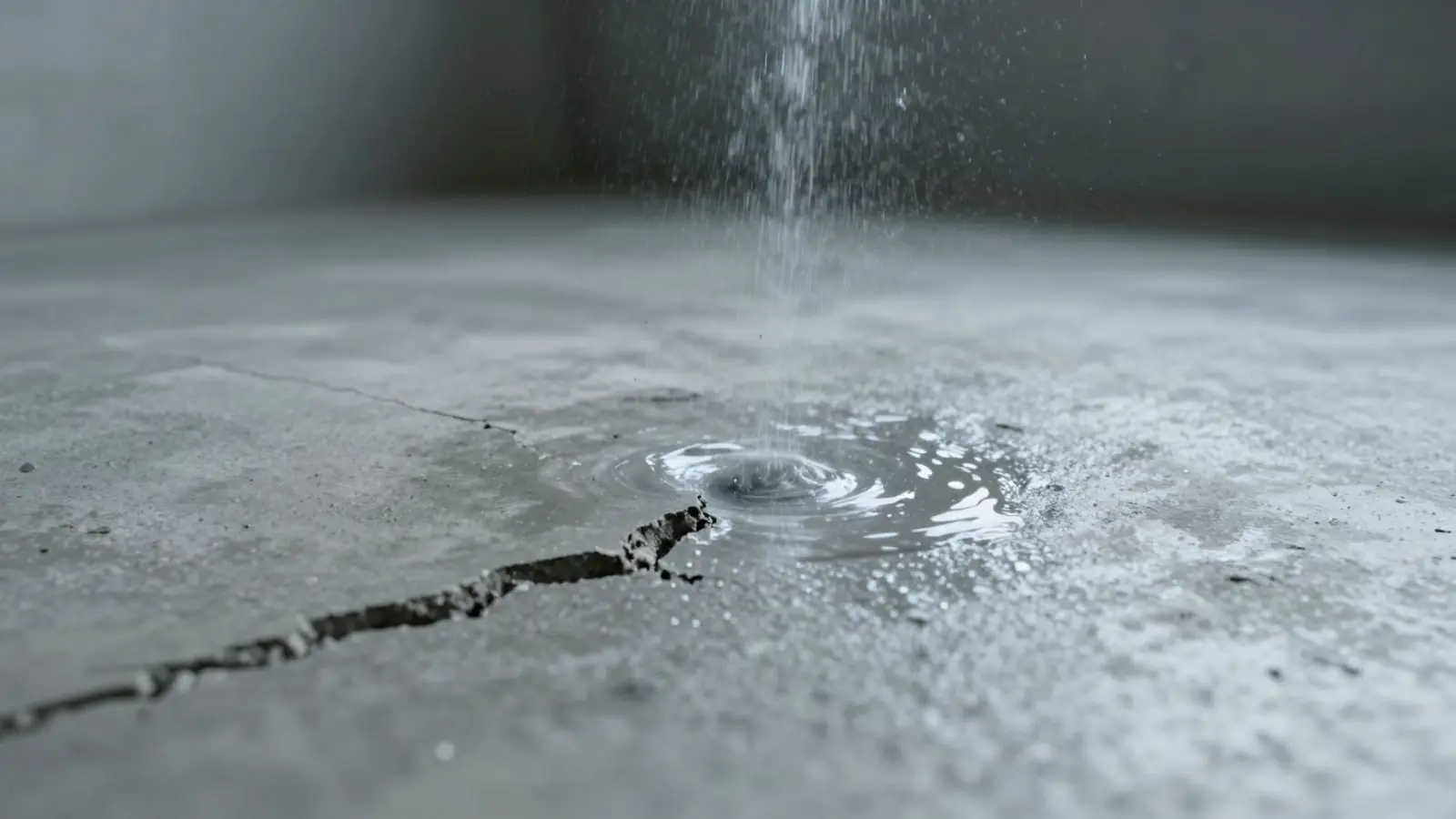
We have no data on how many homes in Thermal sit on concrete slabs, and no data on how often slab leaks happen here. So this page does not assume either one. If your home sits on a concrete slab, it explains what a leaking line under it can look like and what we do about the water left behind.
A slab leak is a break in a water line that runs beneath or inside a concrete floor. The water follows cracks, joints and edges, then rises into flooring and the bottom of walls. Call (760) 769-1159 any time, because dispatch is open 24/7. Water mitigation on our side means extraction and drying, while finding and repairing the pipe belongs to a licensed plumber or leak-detection company.
Signs the water may be coming from under the floor
No single sign proves a slab leak, but several together are worth acting on.
- A warm spot on the floor A patch that feels warm underfoot can point to a hot water line leaking below. It is a clue, not proof.
- A hissing or trickling sound Listen in a quiet house with every fixture off. A steady sound from the floor or a wall deserves tracing.
- A meter that moves with everything off Shut off all fixtures and appliances, then watch the meter. Movement means water is escaping somewhere, though not necessarily under the slab.
- A rising water bill A jump with no change in how you use water suggests a hidden loss.
- Damp carpet or baseboards at a slab edge Moisture along an outer wall or at a floor edge can mean water is rising from below.
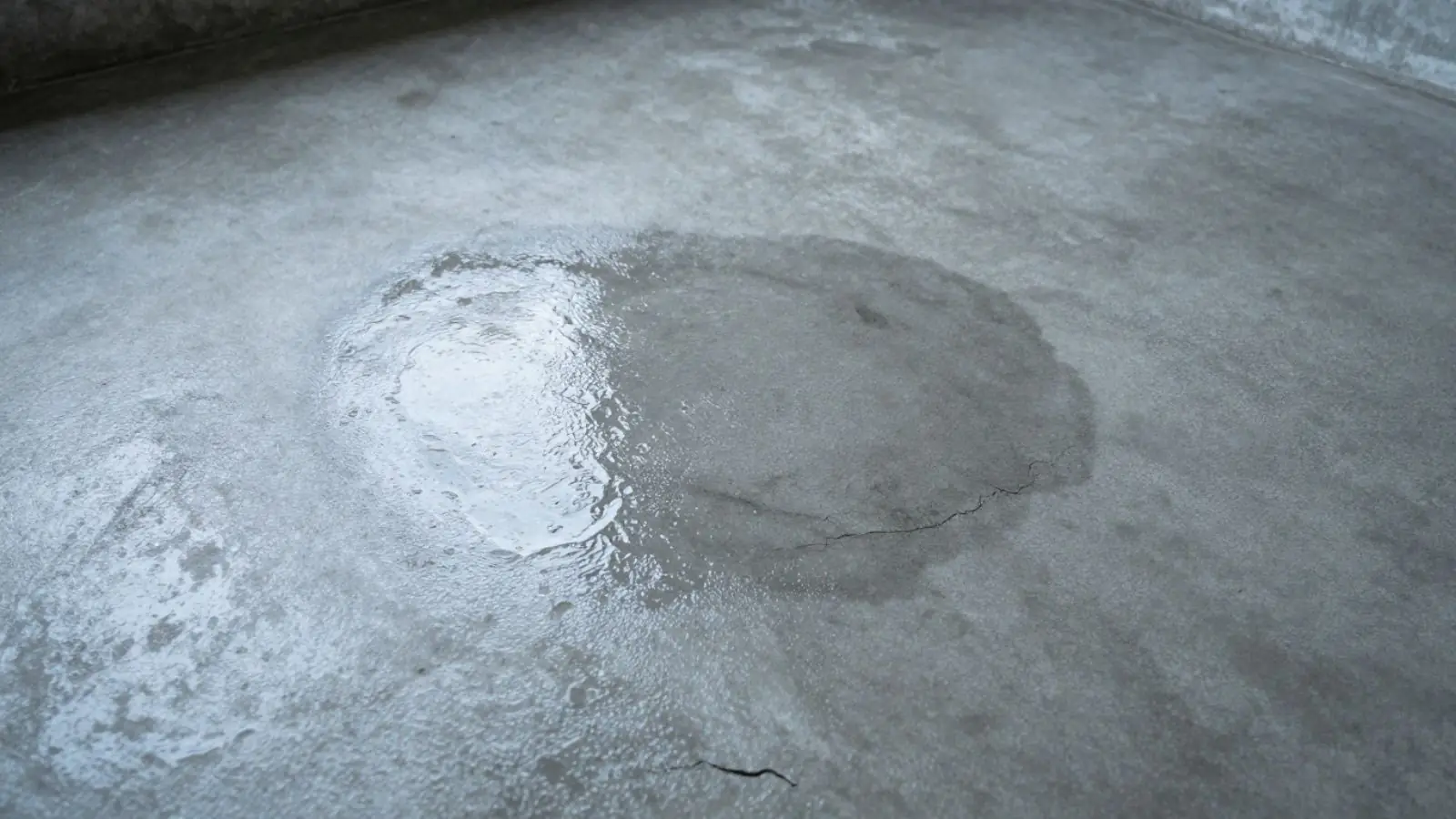
Safety steps at the meter and inside the house
The first job is to stop adding water, and the second is to keep people away from hazards.
- Close the main valve Turn the main shutoff fully closed where the line enters the house, or use the valve at the meter. If neither works, call your water provider.
- Watch the electrical Stay out of standing water near outlets, cords and appliances. Flip the breaker only when the panel is dry and you can reach it safely. Phone the utility or 911 about electrical or gas danger before you phone us.
- Lift and photograph Raise furniture and rugs off wet floors and take photos before moving anything.
- Call a plumber Water stays off until the line is found and repaired, so book a licensed plumber or leak-detection company early.
Who does what: plumber, water provider and our crew
A slab leak needs more than one trade. The table shows where each job ends and the next begins.
| Task | Who handles it | What we do alongside |
|---|---|---|
| Pinpointing the leak | Licensed plumber or leak-detection company | Share moisture readings and thermal images to narrow the search. |
| Repairing or rerouting the line | Licensed plumber | Keep the work area dry so the repair can go ahead. |
| Removing standing water and wet materials | Our crew | Extraction, flooring removal and cleanup. |
| Drying under and around flooring | Our crew | Air movers, dehumidifiers and readings until dry. |
| Rebuilding floors, baseboards and walls | Our crew or a contractor you pick | Agree the scope first, as with other water damage repair. |
How we pull water out from under and around flooring
Water on a slab has nowhere to drain, so it spreads sideways into whatever sits on top. A moisture meter and a thermal camera map the wet area, then an extraction unit removes standing water. Carpet pad, wet baseboards and soaked drywall at the bottom of walls usually have to come out.
Drying follows the ANSI/IICRC S500 reference standard. Air movers push air across and beneath lifted flooring, and LGR dehumidifiers pull the moisture out of the room. We open or lift flooring where needed so air reaches the layer underneath, and we keep taking readings until materials are dry.
Concrete holds moisture and dries slowly. If the water came from a drain line rather than a supply line, we add antimicrobial treatment and remove porous materials it touched.
Water bills, permits and licenses around Thermal
Much of the eastern valley gets its domestic water from the Coachella Valley Water District, while some Thermal addresses sit on small mutual water systems. Whoever sends your bill is the one to phone if the trouble is on the main line. Ask that provider where its responsibility ends and yours begins.
Opening a floor for a pipe repair can involve permits, and the office depends on your address. Riverside County Building and Safety covers permits in unincorporated Thermal and Mecca, but the city of Coachella has its own department. Confirm which office has your address before the floor is opened.
Jobs of $1,000 or more now generally require a licensed contractor, a rule in place since January 1, 2025. A line repair under a slab can easily reach that figure. Check any plumber's license on the California Contractors State License Board website, cslb.ca.gov, before you sign.
Slab leak insurance claims and the sudden versus gradual test
Insurers separate sudden damage from gradual damage. A line that failed and flooded a room in a day looks sudden. A slow leak that ran under the floor for months is often treated as gradual, and many policies exclude that.
Some policies treat the water damage and the cost of reaching the pipe differently, so ask your insurer how yours reads. Your insurer's own rules come first, and insurance.ca.gov, run by the California Department of Insurance, carries a residential property claims guide.
What shapes the price of slab leak cleanup
You hear the scope and price from us before anything starts. These factors move both.
- Flooring type Carpet lifts fast, while tile, wood and laminate take more care and time.
- How far the water spread A single room and a whole floor plan are different jobs.
- How long it was wet Water that sat for weeks means more removal.
- Water source A clean supply line and a drain line call for different treatment.
- Drying days Thick materials and concrete add equipment time.
Mistakes to avoid with a suspected slab leak
A few common moves make the damage bigger or the repair harder.
- Leaving the main open Every hour of running water adds to the wet area.
- Covering wet floors New flooring over a damp subfloor traps moisture.
- Pulling flooring blindly Removal without readings can miss wet areas or take out dry material.
Questions about water damage in Thermal
Yes. Someone answers the dispatch line day and night, and we try to send a crew the same day if the schedule allows. Close the main valve, then call so we can plan the extraction.
No. Finding and repairing the line under the slab belongs to a licensed plumber or leak-detection company. We handle the water, the drying and the cleanup that follow.
If the floor is concrete at ground level with no crawl space beneath, it likely is. A plumber, your home's plans or the building department that covers your address can confirm it. We cannot tell from the street.
Start with the provider named on your bill. Some homes are served by the Coachella Valley Water District and others by small mutual water systems. That provider handles the main line up to its own limit.
It depends on your policy and on whether the loss reads as sudden or gradual. Ask your insurer, and read the residential property claims guide at the California Department of Insurance. Flood is a different matter and usually excluded.