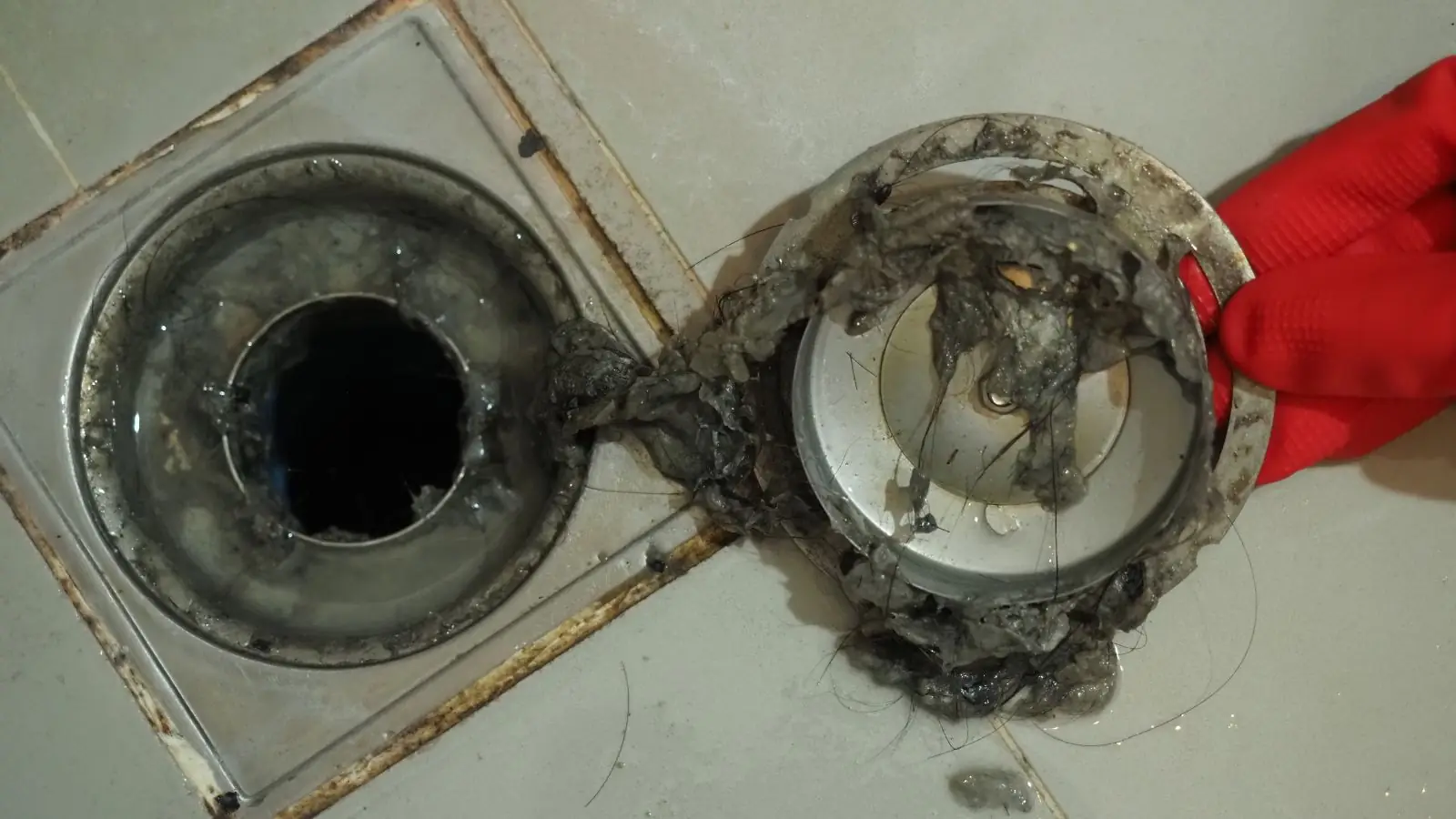
A sewage backup is Category 3 water, the most contaminated class there is. It comes up through a toilet, tub, shower or floor drain when the line downstream is blocked or failing. With summer heat in Thermal passing 110 degrees F on many days, a wet bathroom becomes an odor and bacteria problem fast, so call our 24/7 line at (760) 769-1159 the moment you see it.
We handle the cleanup side of the job. That means pulling out the water, removing what it soaked, disinfecting and drying. Water that rises from outside is a different problem, and the flood damage restoration page explains how floodwater differs from a drain backup.
What the backup is telling you
Where the water shows up says where the blockage sits. Use this as a rough guide, because a plumber makes the final call.
| What you see | What it usually means | What to do |
|---|---|---|
| Toilet gurgles when the washer drains | Air is being pushed back by a blockage in the line | Stop using water and call a plumber |
| Water rises in the tub when you flush | The main line is blocked below the branch lines | Do not flush again, then call a plumber and us |
| Dark water seeps from a garage or laundry floor drain | The backup has reached the lowest opening in the house | Keep out and call for extraction |
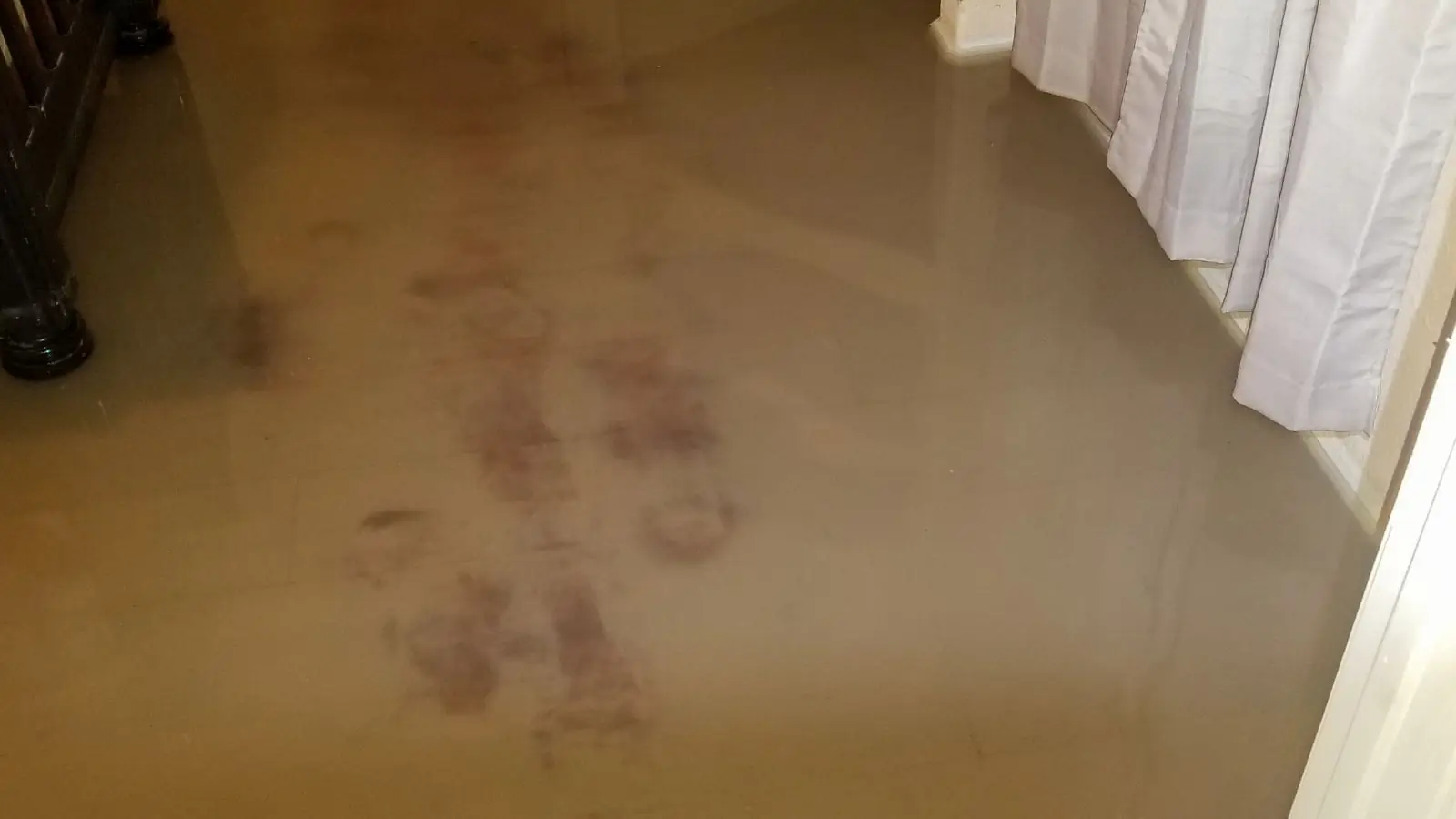
| Carpet near a bathroom wall is wet and smells | Water has traveled out of the room and into porous materials | Do not walk on it and call right away |
Safety steps before anyone touches anything
Treat every drop as contaminated until the area has been cleaned and treated.
- Keep people and pets out Children, pets and anyone with an open cut should stay out of the wet rooms. Close doors to limit tracking.
- No skin contact If you must go in, wear rubber boots and gloves, and wash your hands well afterward. Never wade through it barefoot.
- Do not run water or flush Every flush, shower or load of laundry sends more water into the same blocked line.
- Do not use a household vacuum A vacuum blows fine spray out of its exhaust and cannot be sanitized afterward.
- Power off only if it is safe Switch off power at the panel only if the panel is dry and you can reach it without stepping in water. Otherwise call the utility or 911 first, then us.
A plumber is the right first call for the blockage. Call us right after, because the water inside will not wait for the pipe repair.
How a sewage cleanup runs
- Extraction An extraction unit removes standing water and slurry before anything else is moved.
- Removal of porous materials Carpet, pad, baseboard, lower drywall and insulation that touched the water are cut out and bagged, because they cannot be made safe again.
- Disinfection Hard surfaces, framing and subfloor are cleaned, then treated with an antimicrobial product.
- Drying Air movers and LGR dehumidifiers dry what stays, and a moisture meter confirms it. ANSI/IICRC S500 is the industry reference standard for this work.
- HEPA air filtration A HEPA air scrubber runs during demolition and drying to catch airborne particles.
- Documentation Photos, readings and a written list of removed materials go to you and, if needed, your insurer.
Who clears the line, and who does not
We do not clear the blockage, repair sewer lines or pump septic tanks. A plumber handles a clogged or broken line, and a septic service handles a full tank. Until that cause is fixed, any cleanup we finish can be undone by the next backup.
Often the plumber and our crew work the same day. Tell the plumber the water is already inside. For other contaminated spills, see general water damage cleanup.
What changes the cost of sewage cleanup
Scope drives the price. How far the water spread, how long it sat, how much carpet, pad and drywall it reached, and whether floors are tile or soft material all change the work.
We lay out the scope and the price before demolition starts, so you decide with the facts in front of you.
Backup in the house right now? Call (760) 769-1159 and we will plan the cleanup with you.
Insurance and sewer backup claims
Coverage for a sewer or drain backup is often sold as an endorsement on a homeowners policy, not included by default. Check your policy for the words water backup or sewer backup, or ask your insurer. Floodwater from outside is usually excluded and needs its own flood policy.
The California Department of Insurance publishes a residential property claims guide at insurance.ca.gov that walks through the process. Photograph the area before cleanup, keep every receipt, and let us record what is removed and why, so the claim file shows the reason.
Mistakes to avoid after a backup
- Running the shower or washer to see if the line drains, which pushes more sewage into the house.
- Using a shop or household vacuum on the water or the wet carpet.
- Keeping soaked carpet, pad or lower drywall because it looks fine once dry. Porous materials that touched sewage are removed.
- Waiting until morning. Mold can begin on wet organic material within 24 to 48 hours, per EPA guidance.
Septic tanks, sewer lines and who answers in Thermal
Not every home in the eastern valley sits on a city sewer line. Around Coachella, outlying areas may lack city water and sewer lines, so some homes run on septic. Ask whether you are on a tank, a city line or a shared line, because that decides who you call about the cause.
Indio has the Indio Water Authority, a city water department. Its name tells you it deals with water, so confirm with the city who maintains the sewer line at your address. We cover water damage in Indio as well as Thermal.
Thermal is unincorporated Riverside County, and so is Mecca. Repair permits there go through Riverside County Building and Safety, while cities run their own building departments. Near our Mecca service area, ask the department that covers your address before a plumber digs.
Questions about water damage in Thermal
Yes. Our line is open around the clock, every day, with same-day response when available. Call (760) 769-1159, keep people out of the wet area and do not flush while you wait.
We advise against it. Porous materials that touched sewage have to be removed, and surfaces need an antimicrobial treatment that household cleaners do not replace. Until we arrive, keep people out and stop using water.
No. A plumber clears a blocked line or repairs a broken one, and a septic service pumps a tank. We handle the water, the contaminated materials, the disinfection and the drying that follow.
Often only with a water backup or sewer backup endorsement, so check your policy or ask your insurer. Standard policies usually exclude flood, which is a separate matter. Keep photos and receipts either way.
The cleanup inside the house is the same. The cause is different, because the problem may be the tank or the leach field, and a septic service handles that. If you are unsure which system serves the house, ask before the plumber arrives.