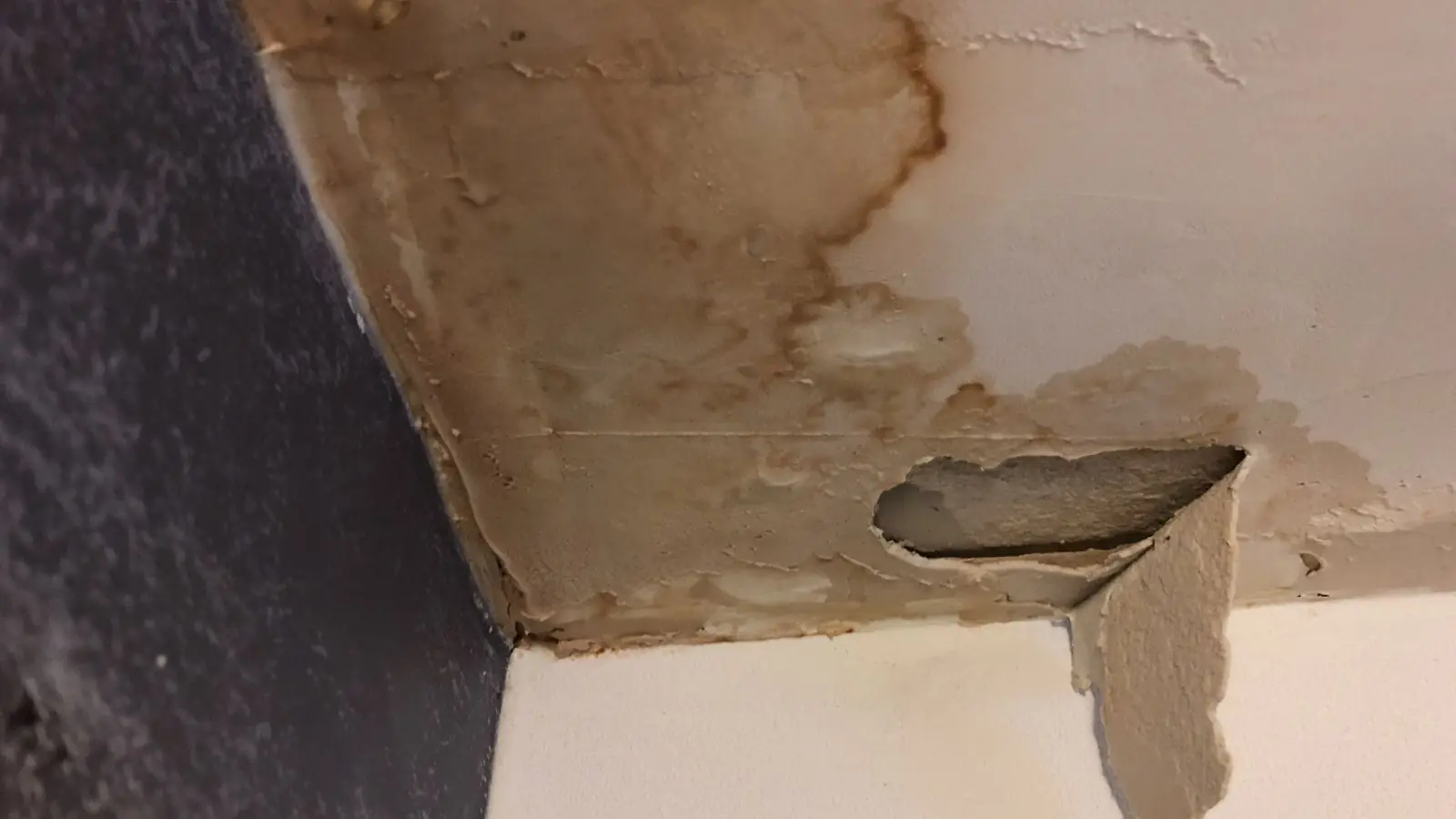
Ceiling repair starts after the leak has ended. The plumber, roofer or AC technician has fixed the cause, and the space above has been dried and checked. What remains is a stained, bubbled or sagging ceiling that has to be cut back, patched and finished.
Many ceilings are drywall, finished flat or with a sprayed texture. We do this rebuild as part of water damage repair, and if the board is still wet or the source is still active, drying comes first through water mitigation. Our line at (760) 769-1159 is open 24/7.
What a brown ring is telling you
The mark on the ceiling is a record of the water, and its shape helps decide how much comes out.
| The mark | What it suggests | What we do |
|---|---|---|
| Pale tan ring with a soft edge | One thin wetting that has dried | Test, then prime and paint |
| Dark ring with sharp edge, often several rings | Repeated wetting over weeks or months | Probe the board, cut back if soft |
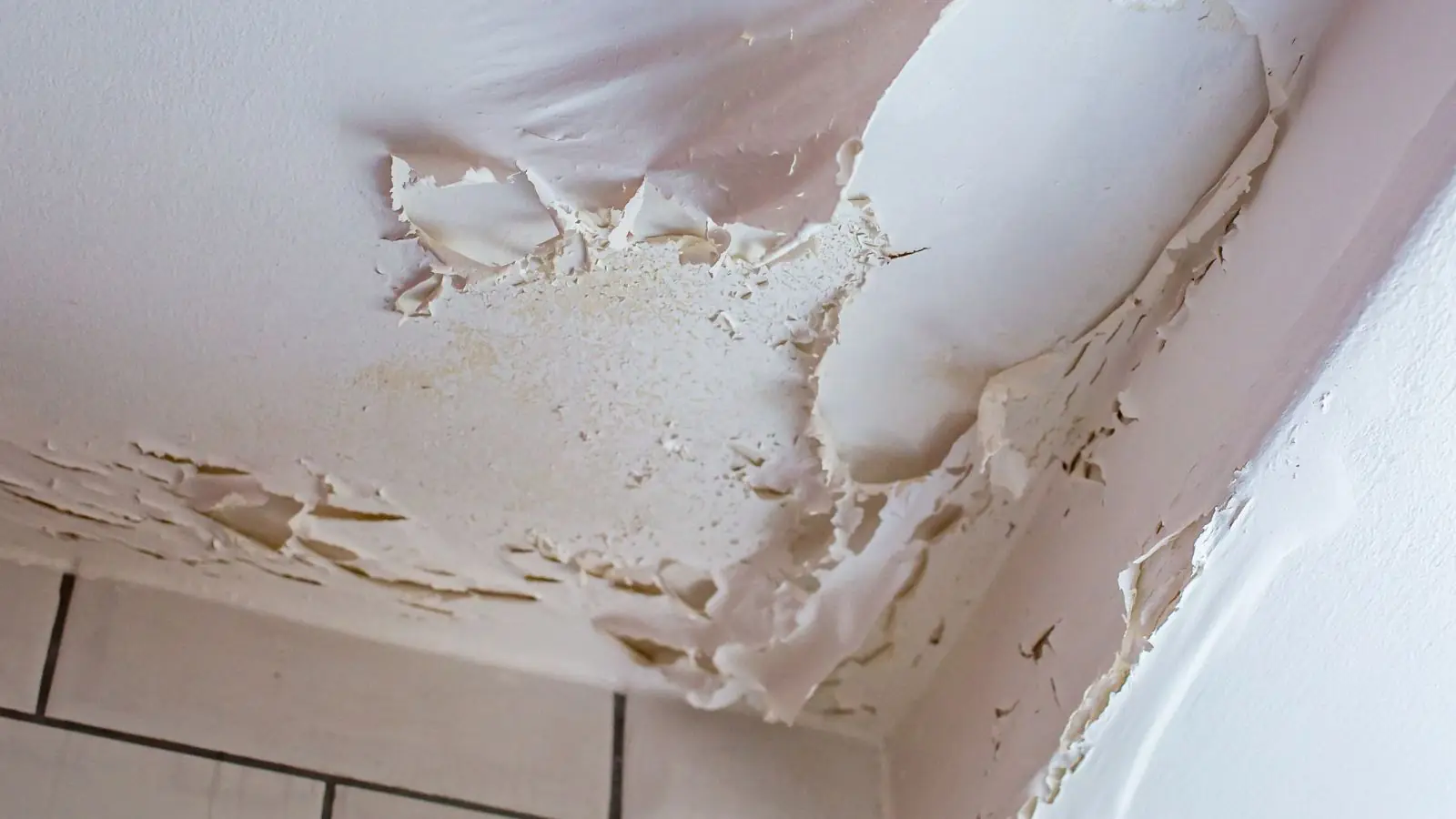
| Bubbled or blistered paint | Water trapped behind the paint film | Open the bubble, check for wet board |
| Sag or bulge between joists | Board saturated and losing strength | Remove the section, check the framing |
| Dark speckling near the stain | Possible mold growth on the surface | Stop and call us before sanding |
Drywall, texture and popcorn finishes
Flat painted drywall is the easiest to repair, since a patch can be taped, floated and sanded smooth. Textured ceilings take more skill, because the new area has to match the pattern around it or the eye finds the patch at once.
Popcorn and heavy sprayed finishes soak up water and hold it, so the stained area often needs more cutting than the stain suggests. Matching them is slow work. Sometimes the cleanest result comes from refinishing a whole section or the full ceiling to a consistent look, and we will say so before starting.
Safety before anyone touches the ceiling
- Cavity confirmed dry We take moisture meter readings first. Closing wet board over wet framing is how the same stain returns.
- Power off at the circuit Lights and fans in the repair area are switched off at a dry, safe panel. Call the utility or 911 if you suspect an electrical hazard.
- Dust controlled Sanding and cutting throw fine dust, so rooms are sealed with plastic and a HEPA air scrubber runs during the work.
- Stay clear of sagging board If a ceiling is still bulging, stay out from under it and do not poke it. Wet board is heavy.
How the repair goes, step by step
- We confirm the source is repaired and read the board and framing with a moisture meter, using a thermal imaging camera to spot any damp zones.
- Stained or soft board is cut back to dry, solid drywall, usually to the nearest joist so the new piece has something to fasten to.
- Wet or compressed insulation above the opening is replaced with dry material.
- New board is hung, taped and floated in thin coats, then sanded.
- A stain-blocking primer seals the old mark. Ordinary paint alone lets the brown ring bleed through.
- Texture is matched, and the ceiling is painted edge to edge so the patch does not show.
Moisture checks follow ANSI/IICRC S500 as the industry reference, and each coat is allowed to cure before the next. Dry desert air speeds that up, but we still confirm compound and primer are ready.
Cooling season, permits and the $1,000 line
Thermal has very hot summers with many days over 110 degrees F, so air conditioners run for months. Condensate lines and attic ducts in that long cooling season are a common wet-ceiling source, which is why the cause must be fixed first. Ceiling work done under a still-dripping line will fail.
Permits depend on where you live. Unincorporated Thermal and Mecca fall under Riverside County Building and Safety, while Coachella and La Quinta run their own departments, so ask the building department that covers your address. Homeowners in Coachella and La Quinta should ask their city.
The California Contractors State License Board says work worth $1,000 or more generally needs a licensed contractor. Check any contractor's license on cslb.ca.gov before you agree to a ceiling rebuild, including ours.
Ceiling damage and your insurance claim
The California Department of Insurance separates sudden water damage from gradual damage. A pipe that burst last night is often covered, while a ceiling stained by a slow drip over many months often is not. Read your policy and ask your insurer where your situation falls.
Its residential property claims guide at insurance.ca.gov explains the steps. Keep photos of the ceiling before repair, the plumber's or roofer's invoice for the cause, and our moisture readings. Insurers tend to ask what caused it and how long it ran.
What changes the cost of ceiling repair
Scope and price are explained before work starts, once we have seen the ceiling and checked the readings. These are the main factors.
- Size of the cutout One patch between joists is small. A whole sagged room is a different job.
- Ceiling finish Flat paint, knockdown and popcorn finishes need different tools, and matching takes time.
- Insulation Replacement is added when the old material is wet or compressed.
- Access and height Vaulted ceilings and tight spaces need scaffolding or extra setup.
- Paint scope A patch can be blended, but a clean look sometimes needs the full ceiling repainted.
Mistakes to avoid with a stained ceiling
- Painting before it is dry Wet board under fresh paint blisters again within days.
- Skipping the stain blocker Brown tannin and rust marks bleed through plain paint.
- Cutting only the visible stain Soft board often extends past the ring.
- Fixing the ceiling first If the leak is still active, the repair is wasted. Get the source fixed by the right trade.
Questions about water damage in Thermal
The phones are staffed around the clock, and a crew can often arrive the same day when available. If a ceiling is sagging, call right away. The repair itself is scheduled after the source is fixed and the cavity is dry.
Not safely. Paint alone lets the stain bleed through, and it can hide wet board. The area should be tested, any soft board cut out, and a stain-blocking primer applied before finish paint.
It marks where water has passed through the board and carried dirt with it. Several rings often mean repeated wetting. The ring tells you water was there, but not whether it is still wet.
Yes, when it is wet or flattened. Insulation that stays wet usually has to come out, and replacing it keeps the new ceiling from absorbing moisture again.
No. Plumbing, roofing and HVAC repair belong to those trades, and the source must be fixed first. We can coordinate timing so the ceiling work follows.
Small patches often do not, but it depends on scope. Unincorporated Thermal is covered by Riverside County Building and Safety, so ask that department about your address.