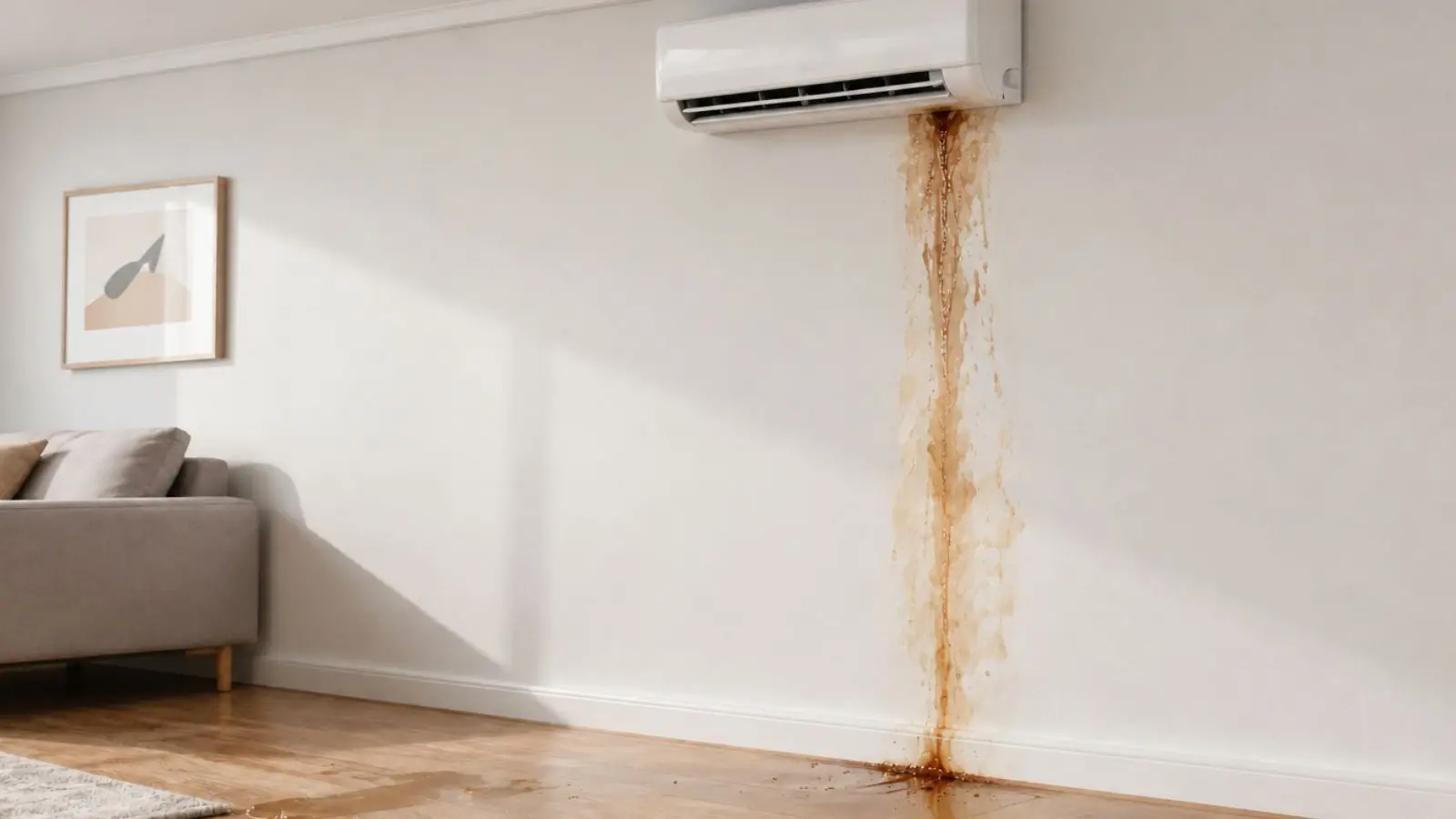
An air conditioner makes water every hour it runs. The coil pulls moisture out of the indoor air, and a drain line is meant to carry that water outside. When the line clogs, the pan fills and spills, and the water goes wherever gravity sends it. Call (760) 769-1159 any time, because our dispatch is open 24/7.
In Thermal the cooling season is long, so these leaks tend to be slow, hidden and wide. Water mitigation for an AC leak starts with tracing where the water travelled, which is often far from the unit. We dry and rebuild the drywall, insulation, flooring and framing it touched. A licensed HVAC contractor has to fix the drain, coil or unit, because we do not do HVAC repair.
Where AC water shows up and what it means
The stain is only the last place the water reached. Use the table to match what you see with the likely source and the damage behind it.
| What you see | Likely source | What it means for the structure |
|---|---|---|
| Brown stain or sag on a ceiling below an attic unit | Overflowing drain pan or clogged condensate line | Insulation and ceiling drywall are wet, and attic framing may be too. |
| Damp or soft wall in a closet beside an air handler | Pan overflow or a sweating drain line | Water wicks up from the bottom of the wall, often behind paint that still looks fine. |
| Wet floor beside a wall-mounted unit | Blocked drain or a unit sitting out of level | Flooring and baseboards take water, and it can run underneath them. |
| Rust-colored streaks under a ductless head | Condensate dripping from the indoor unit's tray or line | The paper face of the drywall stains and softens, usually from slow seepage. |
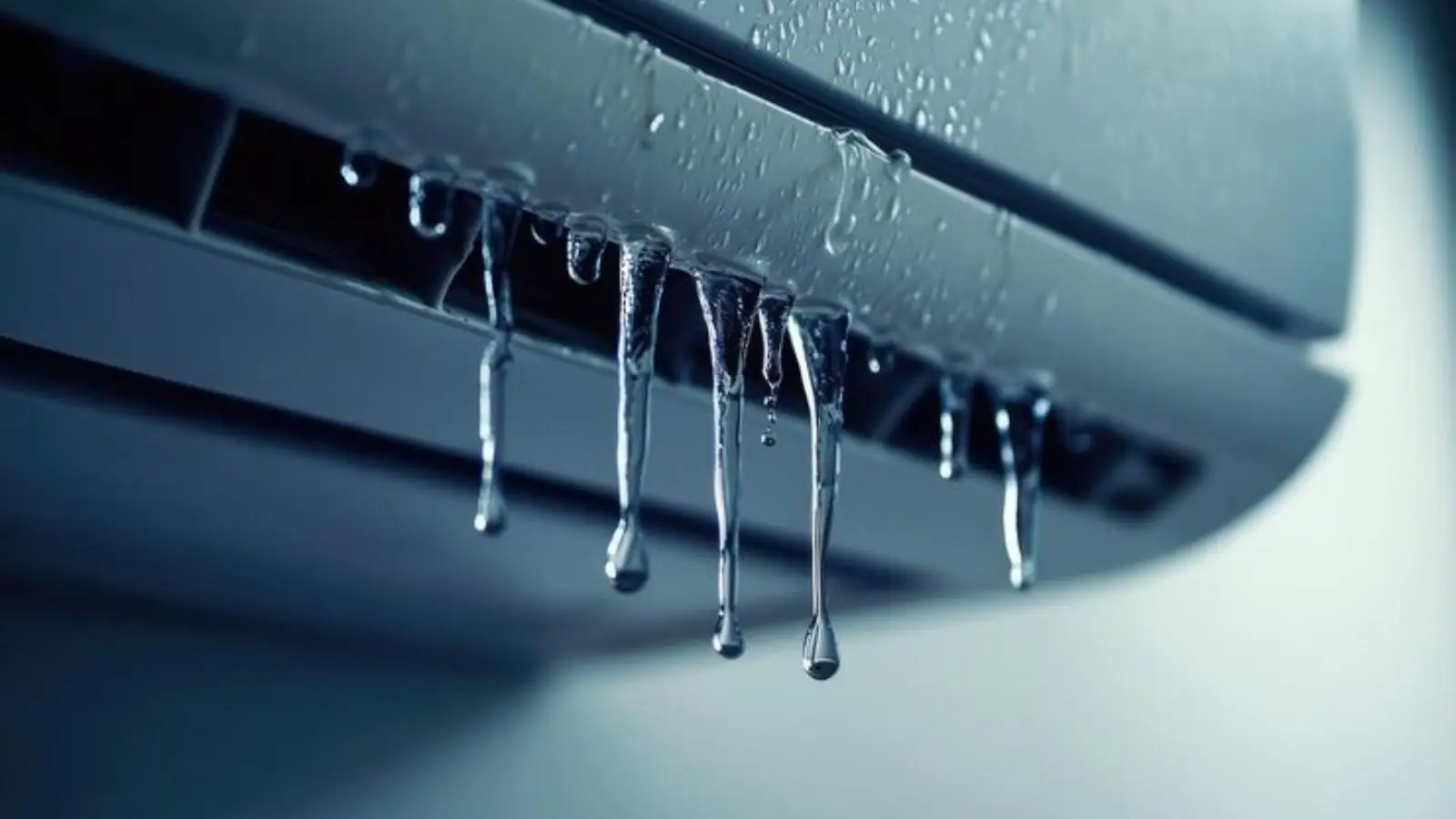
| A burst of water after an ice-crusted coil thaws | Frozen evaporator coil melting past the pan | A short, heavy release that is often more than the pan can hold. |
AC leak safety steps for the first hour
Water and electrical equipment sit close together in an AC leak, so slow down before you start mopping.
- Turn the system off Set the thermostat to off. A running system keeps making water, and a frozen coil keeps melting.
- Stay out of wet electrical areas Do not touch wet equipment or stand in water near an air handler, outlet or cord.
- Breaker only if it is safe Work the breaker only when the panel is dry and easy to reach. If you smell gas or see sparks, call the utility or 911 first.
- Catch and document Set out buckets, lift furniture and rugs, and take photos before anything is moved.
- Book your HVAC contractor The drip will return until the drain, coil or unit is repaired.
How we dry and rebuild after an AC leak
We begin with a moisture meter and a thermal imaging camera, because AC water rarely stays under the stain. Readings along the wall, the ceiling below and the attic floor show how far it spread. Wet insulation comes out, and drywall that stays wet usually has to be cut out too.
Standing water goes first, using an extraction unit on floors. Then air movers and LGR dehumidifiers run for several days, with fresh readings each visit. We dry to the ANSI/IICRC S500 reference standard, and a HEPA air scrubber runs during demolition to keep dust out of the living space.
After that we rebuild what was removed, including insulation, drywall, texture and paint. If you see dark growth or smell a musty odor, a mold follow-up is its own service with its own scope, handled by our mold remediation team. Schedule the HVAC visit before the ceiling is closed so nobody has to reopen it.
How Thermal heat, farms and housing shape AC leaks
Summers here bring many days over 110 degrees F, so a system can run almost nonstop for months. That sends a lot of condensate through a small drain line, and a line that is slimed up in June can be fully blocked by August. A drain flush before the hot season is a small job next to a replaced ceiling.
Canal-irrigated farm fields surround the community. If you live near them, fine dust and plant matter can reach filters and coils, so change filters on a schedule and ask your HVAC contractor to check the line each spring.
Census figures show many single-family homes and apartments in nearby Coachella were built after 2000. If your home is from that period, it may have an attic or closet air handler with a pan under it, so check those spots first. In apartments, a drip upstairs can stain a neighbor's ceiling, and we also serve water damage in La Quinta and nearby Indio where the same steps apply.
Insurance and the sudden versus gradual question
Insurers separate sudden damage from gradual damage. A pan that overflowed in one afternoon is more likely to be treated as sudden. A condensate seep that stained a wall for weeks is often treated as gradual, which many policies exclude.
Coverage depends on your policy, so ask your insurer before assuming either way. For the claims process, the residential property claims guide from the California Department of Insurance (insurance.ca.gov) is the place to start. Dated photos and moisture readings help show when the water started.
What changes the cost of an AC leak job
Scope and price are explained to you before any work starts, and these factors set them.
- Area that got wet One closet wall and a whole ceiling run are very different jobs.
- Materials involved Insulation and drywall come out quickly, while tile, plaster or built-ins take more time.
- Attic or tight access Working above a ceiling or inside a utility closet adds labor.
- Time since the leak Slow seeps that ran for weeks usually need more removal than a one-day spill.
- Rebuild scope Drywall, texture and paint are priced separately from the drying.
Mistakes to avoid and ways to prevent a repeat
Most repeat AC leaks come from the same few habits.
- Drying only the stain Painting over a mark while the wall behind stays wet invites a second, bigger repair.
- Skipping the drain fix Without the HVAC repair, the pan will overflow again.
- Missing routine care Replace filters on schedule and have the condensate line flushed before summer.
Questions about water damage in Thermal
Yes, our line takes calls around the clock, and a crew can usually come the same day when one is free. Turn the system off first, then call and we will plan the drying.
No. We handle the water damage, and an HVAC contractor repairs the drain, coil or unit.
Systems run longest in the heat, so they produce the most condensate and test the drain line hardest. A partly clogged line may cope in spring and fail in July. Local counts of AC leaks are not available to us, so this is how the equipment works, not a statistic.
Yes. A slow seep can soften drywall and feed odors behind the wall long before the stain looks serious. Moisture readings will show whether the wall is still wet.
It can if the material behind it is still damp or the leak continues. Stain-blocking paint covers the mark and does not dry the ceiling. Dry first, repair the drain, then paint.